 Epistemis
Data, inference and uncertainty. Kept separate
Clio combines local retrieval, multimodal conversation and a clinical contract that requires threats, critical variables, reviewable options, uncertainty and sources. It shows the basis of each answer without pretending that a citation turns a model into clinical authority.
First things first, because it matters
Clio is an educational reasoning-support tool, not a medical device or an autonomous diagnostic or prescribing system. It can be false, incomplete or biased even when it sounds convincing. A possible emergency must escalate to in-person assessment and local services, not continue as an ordinary chat.
For clinical decisions: complete data, current guidance and professional judgement. Always.
It retrieves, then answers
It is not a generic chatbot in a white coat. Before answering, Clio searches the app's own material and builds the answer on what it finds.
1. It searches the guides
Your question is matched against the 767 guides and the 9,659 glossary terms.
2. It answers from those
The answer is built from the retrieved passages, not from whatever the model happens to remember.
3. It shows the source
Every relevant claim links to the guide it came from. One tap and you are reading the original.
What actually helps while studying
Explain it to me again
The same thing told another way, shorter or longer, until it lands. A textbook cannot do that.
Quiz me
Have it examine you on what you just read and tell you what only half stuck.
Compare two things
The comparison tables you end up drawing on scrap paper, already made and sourced.
Temporary chat
A conversation stored nowhere at all, for when you would rather leave no record.
Structure a case
Guided intake without identifiers and four flows: differential, management-changing tests, medication safety and red flags/triage.
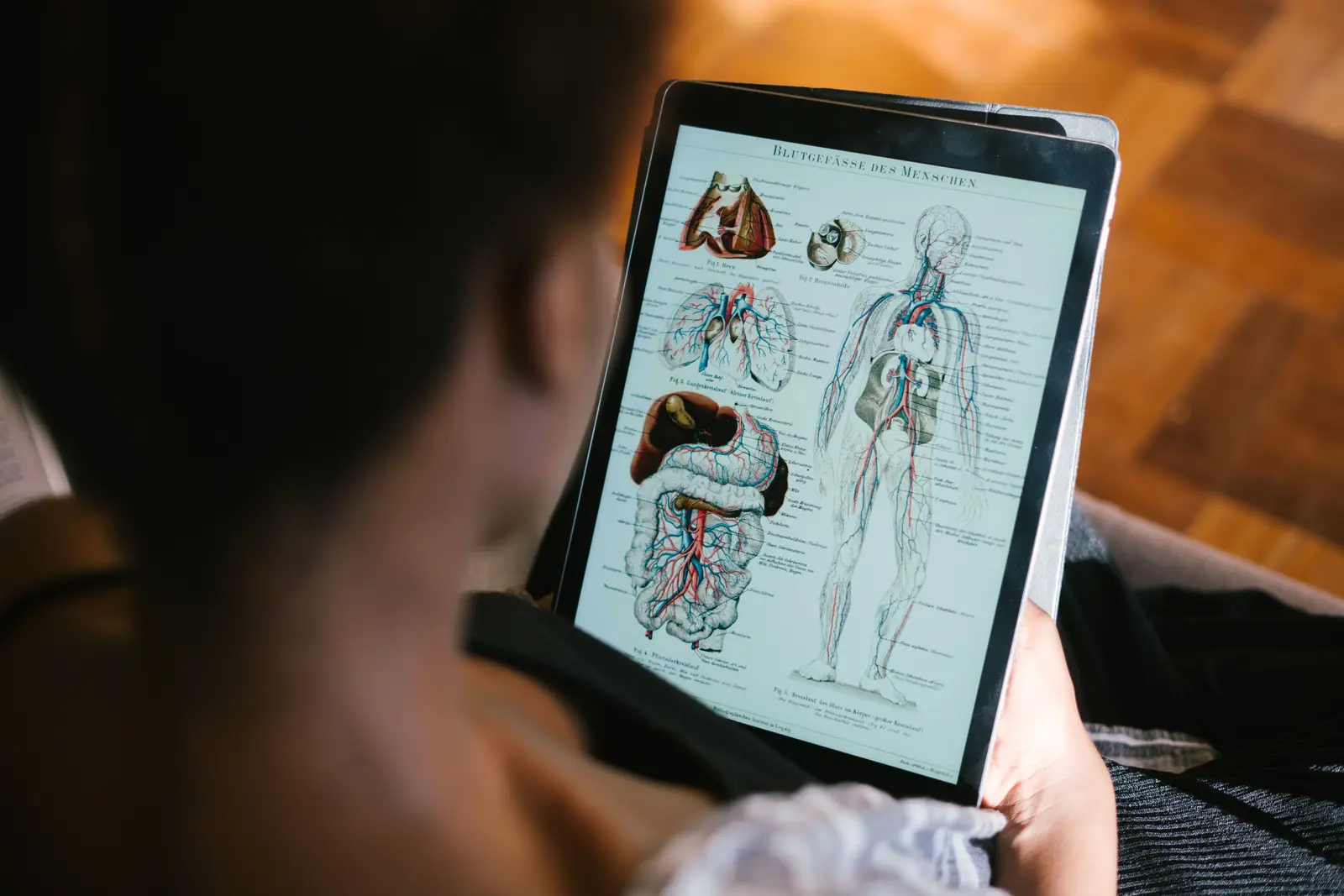
Discuss up to three images
In-turn attachments with controlled quality, orientation and compression. They are not stored or synced with history.
Audit grounding
Checks that [F#] exists, sources are linked and figures, doses or timing have a nearby citation. It does not judge medicine; it makes verifiable properties visible.
Review traceability
Each answer exposes mode, requested engine, personalisation, image count, sources and estimated citation coverage, without revealing hidden chain of thought.
Included, or with your own key
- Included when you sign in, with a sensible usage limit.
- Or your own API key: no limit, and you pay the provider directly.
- Temporary chat is stored neither on your device nor on the server.
- With no key and no session, the rest of the app still works in full.
What gets sent
Only your question and the guide passages needed to answer it. Your progress, your mistakes and your statistics are not sent unless you turn that on.
Ask your guides,
not the internet
Clio does not search outside: it answers from the guides you already carry and tells you which one each statement came from, with the citation marked in the text.
Try it without paying anything
Clio is included when you sign in. The rest of the app needs neither an account nor a connection.
Free. No account required. Offline core; the Atlas downloads by module.